

Revolutionizing the industry
ESSGE NCS (Non Contact Insulation System) is a reliable, tested, and very quickly assembled spacer system.
The unique design of ESSGE NCS ensures a contact-free insulation of pipeline systems that effectively reduces the problem of corrosion under insulation (CUI).
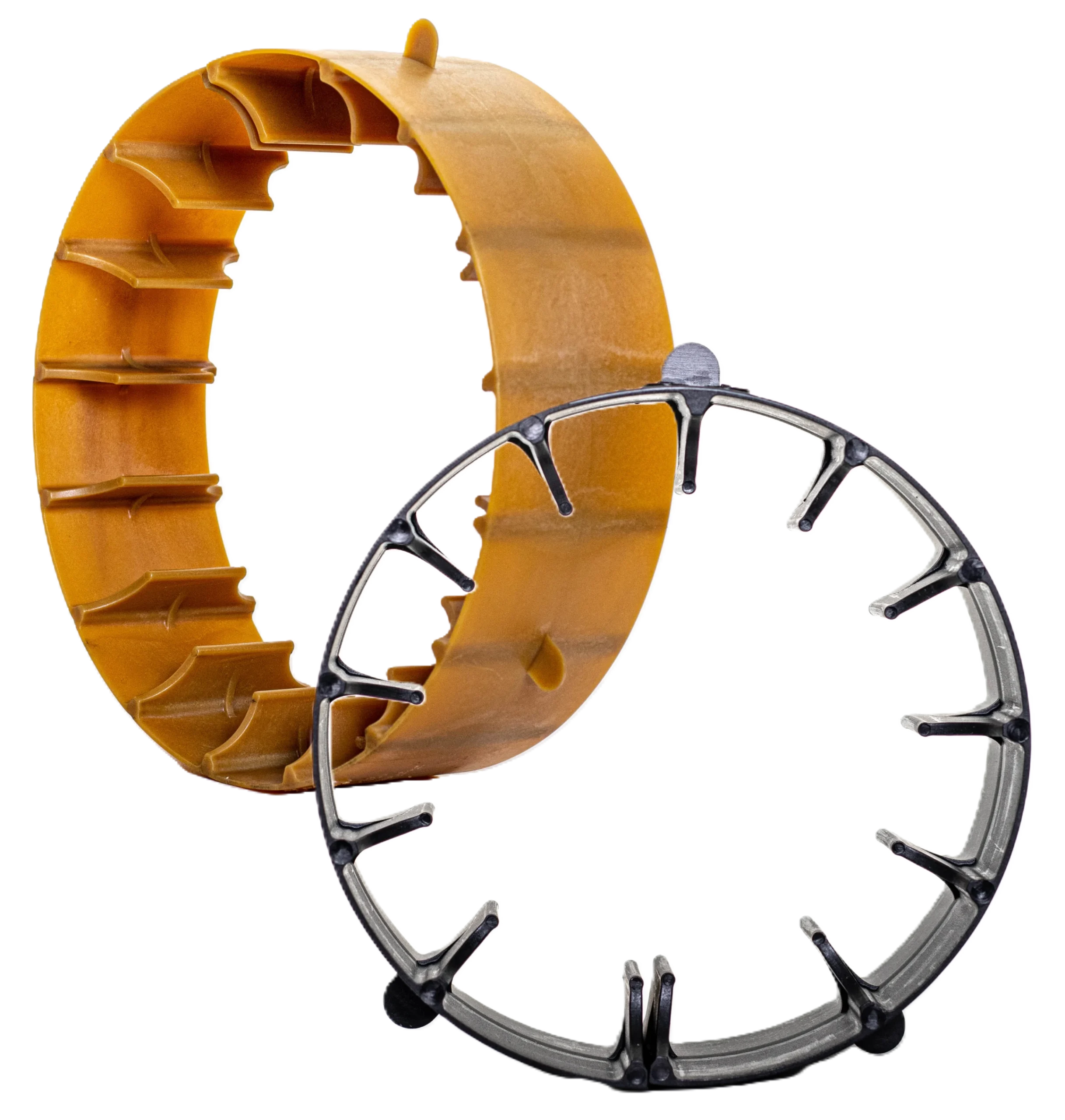
ESSGE NCS Spacer Rings
Designed for simplified and time-efficient installation for pipe dimensions ranging from 18 mm to 318 mm in outer diameter.
ESSGE NCS Spacer Band
Designed for pipes, tanks or vessels with a dimension ranging above 318 mm in outer diameter.
ESSGE NCS Pins
Designed for high adaptability where more complex distancing is needed such as tight bends, flanges or irregular sections.
The ESSGE NCS Spacer system range is available for both high- and low service temperatures, regardless of which product that suits your particular service needs.
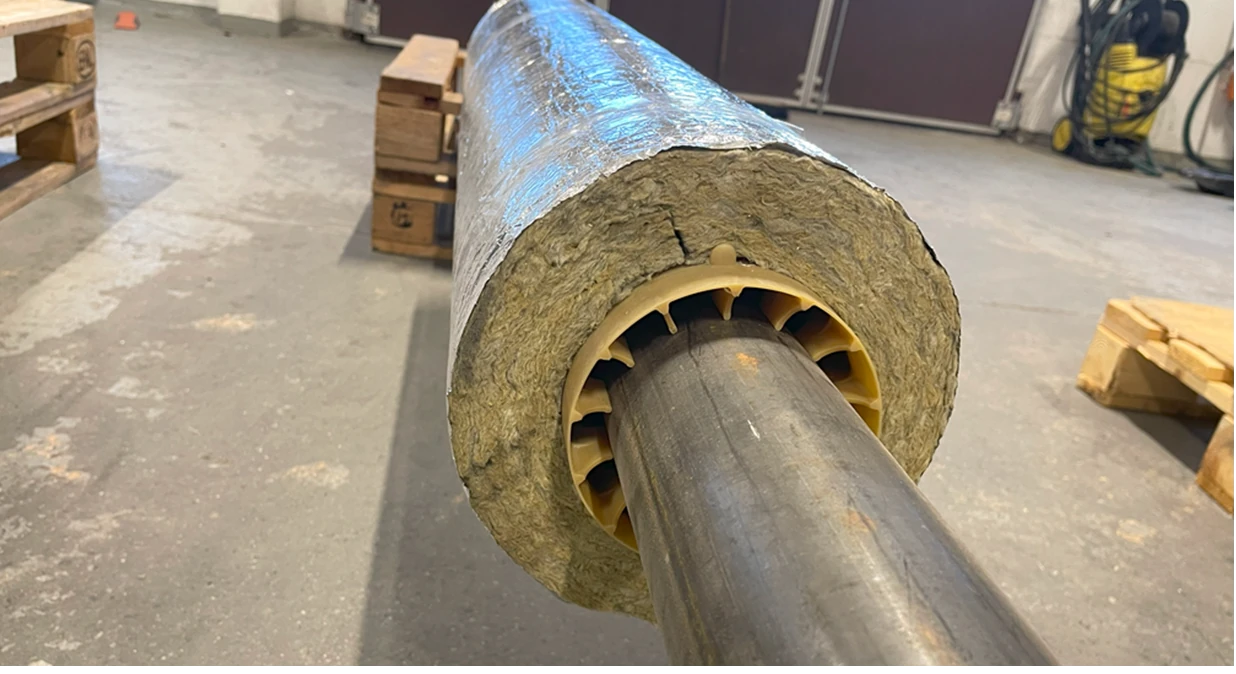
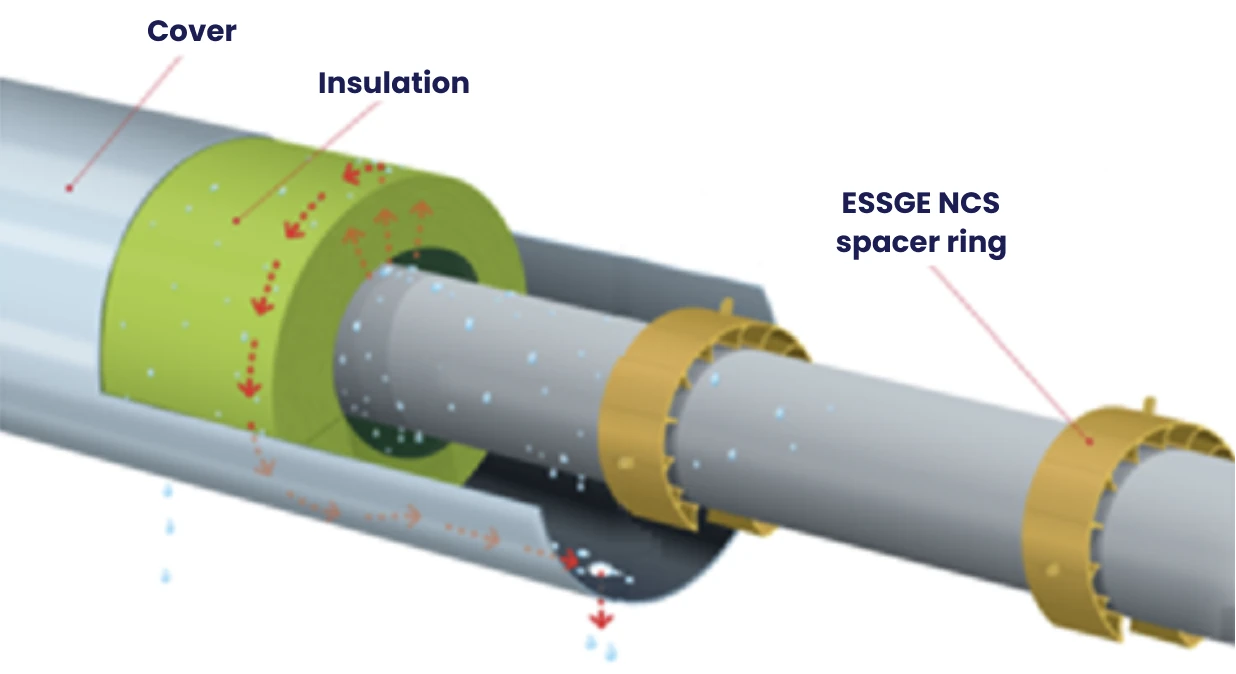
Unique design
The unique design of the spacer system allows for easy maintenance of pipelines, without any need of tools.
The spacer system, made of high-temperature resistant polymer, can be mounted without the risk of damaging coatings, paint, and any heat-increasing cables.
One of the industries most efficient solution to combat corrosion under insulation (CUI)
Download the PDF-file now to view the technical specifications and sizes.
Fast, flexible and reliable
ESSGE NCS is reliable for preventing CUI and comes in a variaty of different sizes. It’s very fast and effortless to mount.
What is corrosion under insulation?
Corrosion under insulation (CUI) is a major hazard in both on- and off-shore installations
Pipeline systems that operate at high temperatures are typically insulated to prevent heat and energy losses, as well as for health and safety reasons. Problems with corrosion under insulation can occur on carbon steel, stainless steel, and cast iron as a result of water penetrating and saturating the insulation on the pipeline system, which quickly leads to corrosion.
The annual costs of CUI is estimated to 276 billion USD [1] and is the most common cause of unplanned and costly shutdowns. Between 40% and 60% of maintenance costs for pipeline systems are related to CUI [2].
The effectiveness of space between the pipe and insulation has been tested and recommended in the Norwegian oil and gas sector to extend the lifespan of pipeline installations [3][4].
[1] Koch, G. H., Brongers, M. P., Thompson, N. G., Virmani, Y. P., & Payer, J. H.
(2002). “Corrosion cost and preventive strategies in the United States” (No. FHWA-RD-01-156).
[2] B.
J Fitzgerald, S. Winnik, “A strategy for Preventing Corrosion Under Insulation on Pipeline in the Petrochemical Industry”, JPCL, April 2005.ä
[3] Haraldsen, K.: ”
Corrosion under insulation –testing of protective coating systems at high temperature”, Paper no 10022, NACE Corrosion 2010.
[4] Kvilhaug F.A.: “
How do different insulation solutions affect corrosion under isolation (CUI)?” Bergen, Norway, Overflate 2014
Bigger needs? Don’t worry.
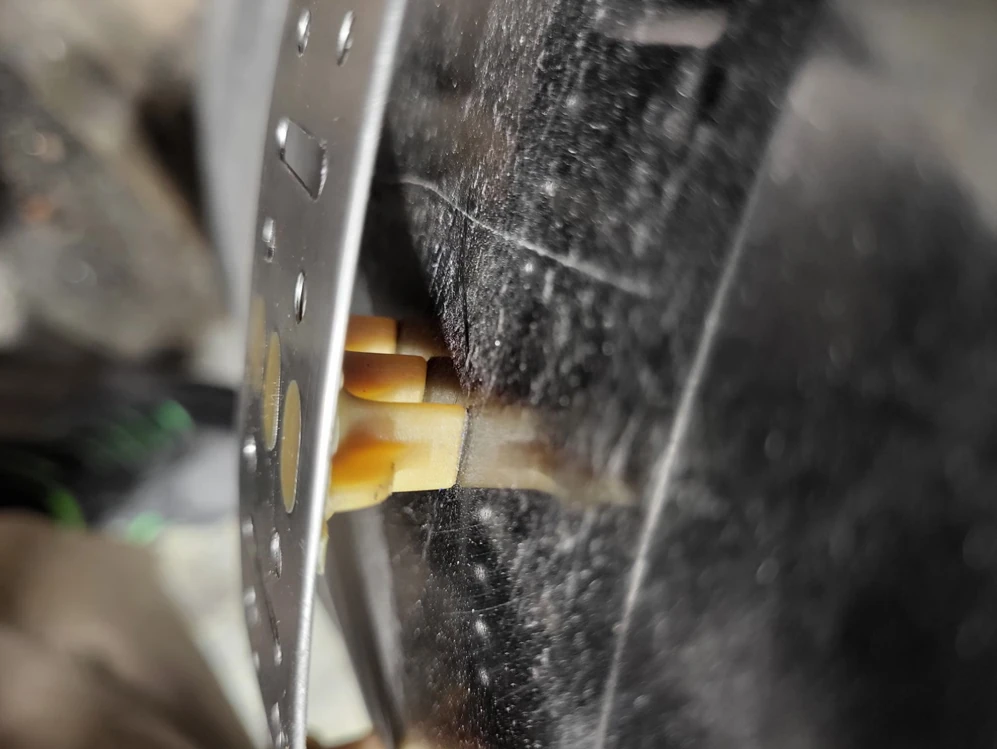
ESSGE NCS Band is the solution for CUI-reducing insulation on large pipes, tanks and towers, with reduced risk of damaging coatings, paint, and heat-tracing cables.
It consists of spacer elements, moulded onto an AISI 316L stainless steel band, to prevent CUI between the insulation and the object.
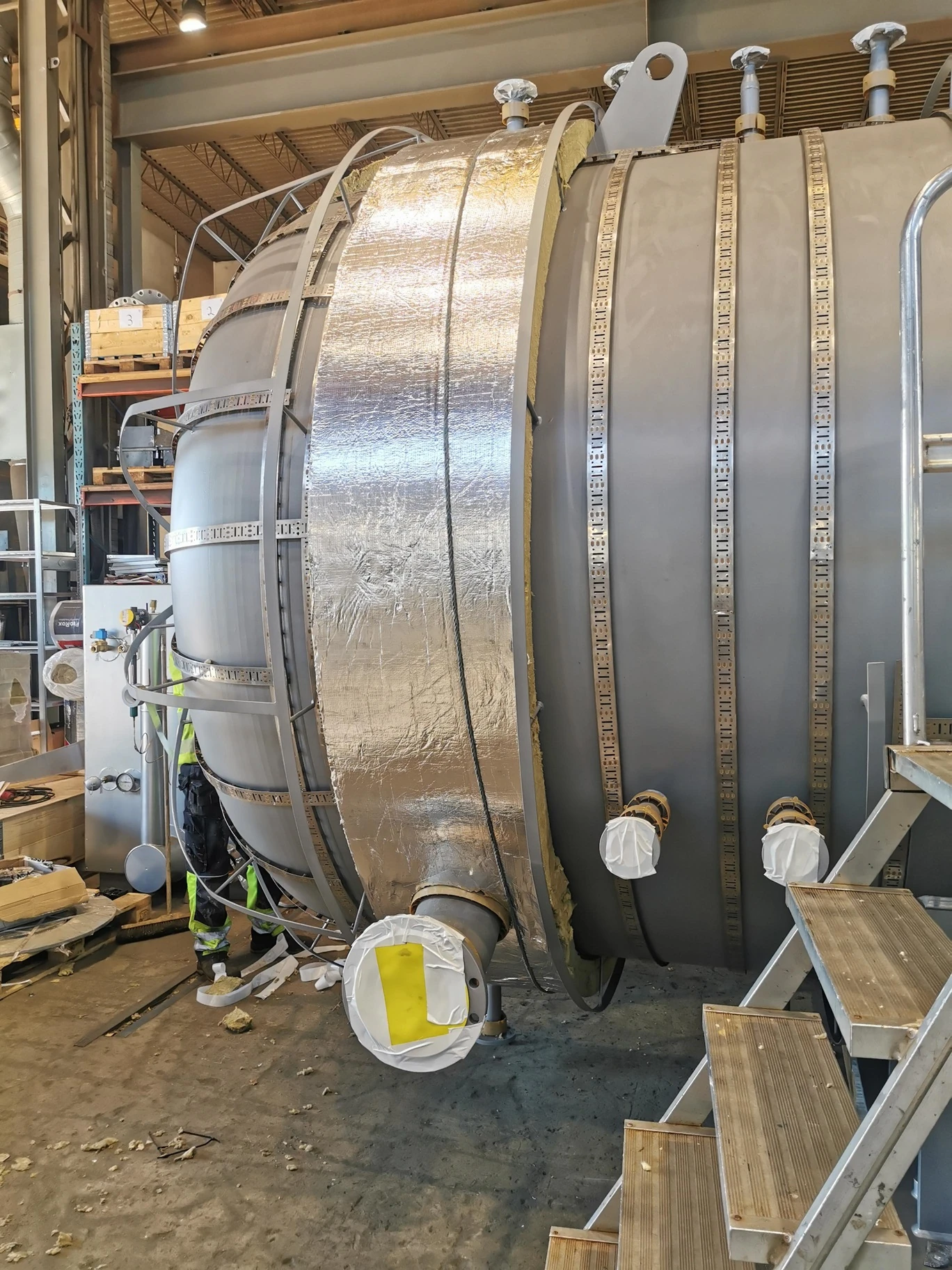
Highly customizable
Effortless assembly, thanks to pre-formed holes and slots used with stainless steel rivets for joints and fastenings.
ESSGE NCS Band is normally supplied in 10-meter rolls but can be manufactured in special lengths.
FAQ
Common questions about ESSGE NCS Spacer System & CUI
Corrosion Under Insulation (CUI) is the external corrosion that develops on insulated metallic equipment (pipes, vessels, tanks) when moisture becomes trapped beneath insulation and contacts the metal surface. CUI is hidden under insulation and can cause severe, costly damage if not mitigated.
CUI often goes undetected until significant damage has already occurred , leading to compromised structural integrity, leaks, safety risks, unplanned downtime, and high repair costs. It’s a major corrosion mechanism across oil & gas, petrochemical, and other industrial sectors.
Water from rain, condensation, humidity or leaks penetrates insulation and becomes trapped between insulation and metal. With oxygen present, this moisture creates a corrosive environment that degrades the metal surface beneath.
ESSGE NCS is a Non-Contact Insulation Spacer System designed to create a defined air gap between the insulation and the pipe or equipment surface, reducing direct contact with wet insulation and lowering CUI risk.
By maintaining a controlled air gap, ESSGE NCS prevents insulation from directly contacting the metal surface, which reduces the duration that moisture is in contact with the pipe or vessel—thereby lowering corrosion risk.
ESSGE NCS can be used on pipes, tanks, and vessels in industrial insulation systems, particularly in sectors where CUI is a concern such as oil & gas, petrochemical, and process industry applications.
The system consists of spacer rings, plates, buttons and bands (including PTFE-based spacer elements on stainless bands) that are installed without tools to maintain separation between insulation and the substrate.
ESSGE NCS is designed to be installed without damaging surface coatings, paint, or heat tracing cables, protecting underlying layers while providing spacing for corrosion risk reduction.
Yes – ESSGE NCS is compatible with common insulation materials such as mineral wool, rock wool and typical industrial insulations, and is installed prior to the insulation to ensure a consistent air gap.
ESSGE NCS supports best practices for CUI mitigation and aligns with industry guidance like API, AMPP (formerly NACE), and recognized CUI management practices by enabling improved corrosion control through air gap spacing and accessibility.
Contact us
Our expertise has made us a trusted partner to more than 80 customers in over 100 countries since our establishment in 1965. With our experience in the industry, we provide complete product development and support – from design to product delivery.